The best things to do in Chiang Rai are the dazzling White Temple (Wat Rong Khun), the Blue Temple and the dark art of Baan Dam, a day trip to the Golden Triangle on the Mekong, the tea hills of Choui Fong and Doi Mae Salong, and the evening clock-tower show and night markets. Allow 2-3 days rather than a rushed day trip.
Chiang Rai is Thailand's northernmost province and a relaxed city of around 70,000 people on the Kok River, about three hours from Chiang Mai. It was founded in 1262 by King Mengrai, who later moved his capital to Chiang Mai, and today it is best known for three extraordinary modern temples and art spaces created by local artists, all within 20 minutes of the centre.
Beyond the city lie tea-covered hills, hill-tribe villages, royal gardens and the Mekong at the point where Thailand, Laos and Myanmar meet. Many visitors see Chiang Rai on a single long day tour from Chiang Mai, but that means six hours in a minivan and only a glimpse of each sight. Two or three nights lets you see the temples at quieter times and get into the hills.
November to February is the most pleasant season, with cool mornings and clear views from the hills. March and April can be hazy from agricultural burning, and the June to October rains turn the tea terraces a vivid green. Temples ask for covered shoulders and knees; see our temple etiquette guide.
Chiang Rai's star sight is Wat Rong Khun, about 13 km south of the city. National Artist Chalermchai Kositpipat began rebuilding this village temple in 1997 as a lifelong work of art, and it is still being extended. The main hall is brilliant white, a symbol of the Buddha's purity, and inlaid with mirrored glass that sparkles in the sun.
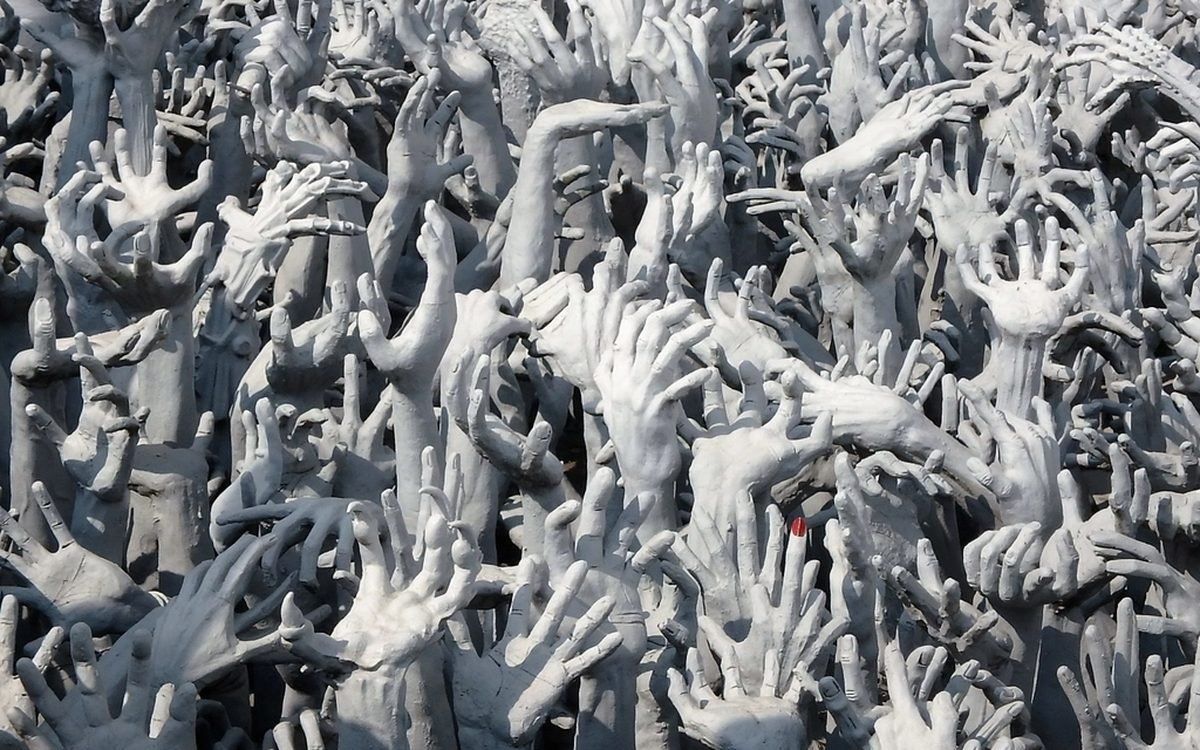
To reach it you cross a bridge over a sea of reaching hands, representing desire and suffering, before entering the ordination hall. Inside, the murals mix traditional Buddhist imagery with a surprising cast of pop-culture heroes, villains and world events. Photography is not allowed inside the hall. Do not miss the ornate golden building in the grounds, which is, famously, the toilet block, and the gallery of Chalermchai's paintings.
Chiang Rai's other art-temples make a perfect half-day circuit, ideally combined with the White Temple:
A Grab or taxi between these sites costs about 150-350 THB per leg, or hire a car and driver for a half day for around 1,000-1,500 THB.
Chiang Rai's centre is compact and easy to explore on foot. The golden clock tower in the middle of the main roundabout was also designed by Chalermchai; every evening at 7pm, 8pm and 9pm it puts on a short light and music show.
Try khao soi, the northern curry noodle soup, sai oua (herby Lanna sausage) and nam prik ong with sticky rice at the markets, from 40-80 THB per dish. Our food in Thailand guide explains the northern specialities.
About 60 km north of the city, at Sop Ruak, the Ruak River meets the Mekong and you look across to Laos and Myanmar at the same time. This is the Golden Triangle, once the heart of the opium trade. The viewpoint and giant golden Buddha by the river are touristy, but the history is fascinating:
Most day trips also stop at Mae Sai, Thailand's northernmost town on the Myanmar border, for its busy market. Crossing into Myanmar here is not recommended given the current situation; check your government's travel advice before any border crossing.
Chiang Rai's hills produce some of Thailand's best oolong and green tea, and the plantations are beautiful to visit:
North-west of the city, the Doi Tung Royal Villa was the home of the late Princess Mother, who led a project to replace opium farming with coffee, macadamia and crafts. Visit the chalet-style villa, the immaculate Mae Fah Luang Garden and the arboretum, and buy Doi Tung coffee and textiles made by local communities. Combined tickets cost around 200-300 THB.
For nature, Khun Korn Waterfall, about 30 km south of the city, is the province's highest at around 70 metres, reached by a jungle walk of roughly 1.5 km each way; it is most impressive from August to December. The Kok River, which flows through the city, can be explored by longtail boat towards riverside villages and hot springs.
Many tours stop at Akha, Lahu, Karen and Yao villages in the hills. Avoid places that charge an entrance fee to photograph people, including the so-called long-neck villages, and look instead for community-run homestays and treks where the income stays with the village. We also advise against elephant camps with riding; if you want to see elephants, read our ethical elephant sanctuary guide first.
From Chiang Mai, comfortable Green Bus coaches run frequently to Chiang Rai's Bus Terminal 1 in the centre: about 3-3.5 hours and 180-350 THB depending on class. Direct flights from Bangkok to Chiang Rai (CEI) take about 1 hour 20 minutes. There is also a scenic but slow minivan route from Pai via Chiang Mai, and slow boats to Luang Prabang in Laos leave from Huay Xai across the river from Chiang Khong. Compare options on our transport tickets page, and see Bangkok to Chiang Mai for the first leg north.
In the city, Grab and the local blue songthaews are cheap. For the outlying sights, a car with driver costs about 1,800-2,800 THB for a full day, which is excellent value for two to four people. Scooters rent for 200-300 THB per day, but distances are long and the mountain roads are steep; see getting around Thailand.
Stay near the clock tower to walk to the markets in the evening, or by the Kok River for quieter resorts; compare hotels in Chiang Rai.
Two to three days is ideal: one for the White Temple, Blue Temple and Baan Dam, one for the Golden Triangle and Doi Tung, and one for the tea hills. A single day trip from Chiang Mai only covers the highlights.
It works if you are short of time, but expect around six hours on the road and brief stops. Staying at least one night lets you see the White Temple before the crowds and the evening markets.
Foreign visitors pay about 100 THB. Wat Rong Khun is open roughly 8am-5pm daily and is quietest right at opening time.
Green Bus coaches leave Chiang Mai's Arcade bus station frequently and take about 3-3.5 hours for 180-350 THB. A private car with driver costs more but lets you stop at hot springs and viewpoints on the way.
Yes, the Thai side at Sop Ruak and Chiang Saen is a normal tourist area. Do not cross into Myanmar and check official travel advice before any border crossing.