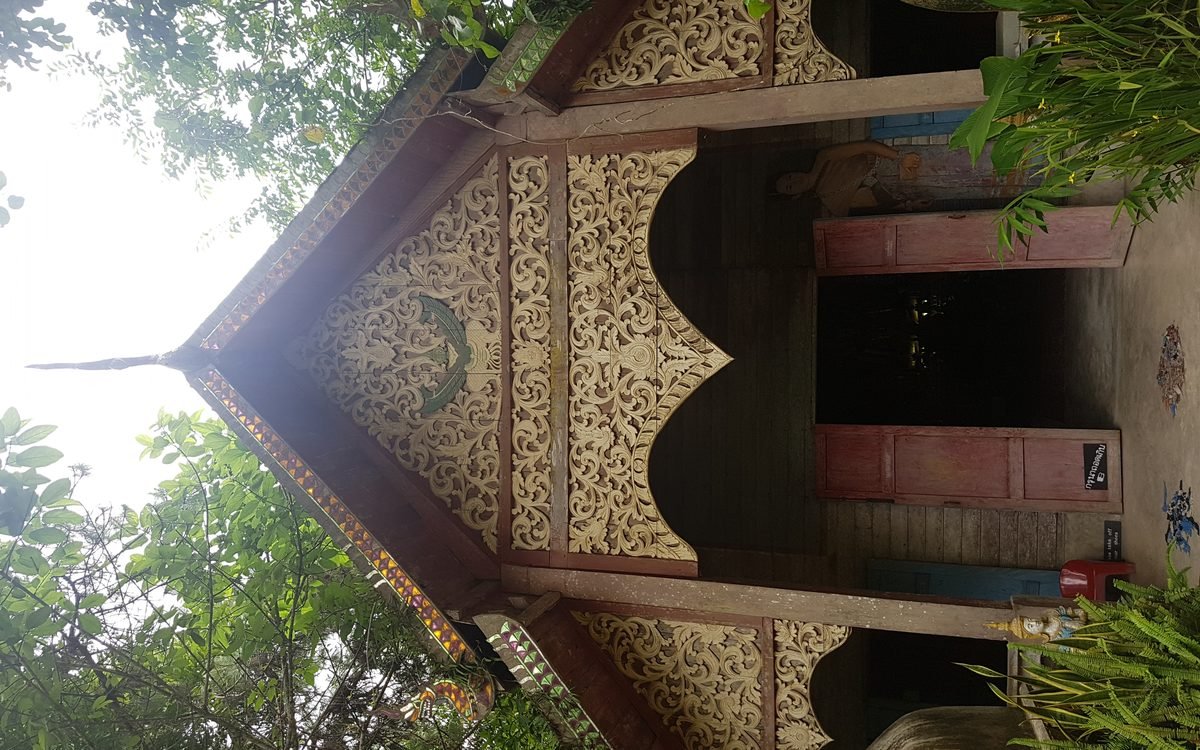
At Thai temples, cover your shoulders and knees, take your shoes off before entering any hall with a Buddha image, and never point your feet at a Buddha or a monk. Keep your voice low, do not climb on or touch images, and women should not touch monks or hand them anything directly.
More than 90% of Thais are Theravada Buddhists, and the country has over 40,000 temples (wat). Even the most famous ones, such as Wat Phra Kaew in Bangkok or Wat Phra That Doi Suthep above Chiang Mai, are working places of worship, not museums. Monks live there, families come to make merit, and people pray in front of the images you are photographing.
Thais are famously tolerant of foreigners who get things slightly wrong, and nobody expects you to know every custom. But a few basic rules make a real difference: they show respect, keep you from being turned away at the gate and make visits more rewarding, because people are far warmer towards visitors who clearly make an effort. The good news is that the essentials are simple and the same across the country, from the royal temples of Bangkok to the small village wats of the north and the ancient ruins of Ayutthaya and Sukhothai.
The rule is simple: cover your shoulders and your knees. It applies to men and women alike, and loose, light clothing is also the most comfortable choice in the heat.
| Fine to wear | Avoid |
|---|---|
| T-shirts and shirts with sleeves | Vests, tank tops, off-the-shoulder or cropped tops |
| Long trousers, including light linen or elephant-print trousers | Shorts and short skirts above the knee |
| Long skirts, dresses and sarongs | Leggings, very tight or see-through clothing |
| Sandals or shoes that slip off easily | Ripped jeans, clothing with offensive or religious prints |
At smaller temples, a shawl over bare shoulders is usually accepted. The Grand Palace and Wat Phra Kaew in Bangkok are much stricter: guards check every visitor, and leggings, ripped jeans, tight trousers and sleeveless tops are refused. Wraps can be rented or bought near the entrance, but it is easier to arrive properly dressed. Popular temples such as Wat Pho, Wat Arun and the White Temple (Wat Rong Khun) in Chiang Rai also check, and often lend or rent sarongs.
A practical tip: carry a light scarf or sarong in your day bag. It weighs nothing, and it turns beach clothes into temple clothes in seconds.
Wear shoes that are easy to take off. On a busy day of temple hopping you may take them off and on a dozen times, and hot tiles in the midday sun are another good reason to visit early.
In Thai culture, the head is considered the highest and most sacred part of the body, and the feet the lowest. Most temple etiquette follows from that idea.
If you want to show respect in front of the main image, kneel, press your palms together at your chest and bow three times, touching your hands and forehead to the floor. Nobody expects visitors to do this, but it is always well received.
Monks are treated with great respect, and there are clear rules about how to interact with them.
At dawn, monks walk barefoot through the streets collecting food. If you want to take part, buy offerings such as sticky rice, fruit or sealed drinks from a local market, remove your shoes, and kneel or stand quietly with your head lower than the monks'. Place the food in the bowl without speaking and do not touch the monk. If you only want to watch, keep your distance and never use a flash.
Photography is allowed in the grounds of almost every temple, and in most halls. The main exceptions are signposted, including inside the chapel of the Emerald Buddha at Wat Phra Kaew. Some general rules:
You are welcome to make merit. Small offering sets of a lotus bud, a candle and incense cost around 20-40 THB; light the candle and incense, hold them with the lotus while you bow, then place them in the holders. At some temples you can press a square of gold leaf onto an image. Donation boxes are found everywhere and help pay for upkeep, and a 20-100 THB note is appreciated. Where there is an entry fee, such as at Wat Pho or Wat Arun, it goes towards maintaining the site.
Signs at airports and in tourist areas remind visitors that the Buddha is not a decoration. Avoid using Buddha heads as ornaments or placing images on the floor, in bathrooms or below waist height. Buddha tattoos are widely considered disrespectful and can cause offence. Officially, exporting Buddha images, apart from small amulets and personal items of worship, requires a permit from the Fine Arts Department, so check with the seller before buying anything large.
Major Buddhist holidays follow the lunar calendar, so dates change each year. The main ones are Makha Bucha (February or March), Visakha Bucha (May or June), Asarnha Bucha and Khao Phansa, the start of Buddhist Lent (July). On these days:
Respect for the monarchy is closely linked with religion in Thailand, and portraits of the King appear in many temples. Never make negative comments about the royal family; Thailand's lèse-majesté laws are strict and apply to foreigners too. Stand for the royal anthem in cinemas, and stop when the national anthem plays in public places at 8:00 and 18:00. For other local customs and laws, see our Thailand safety guide.
Before you head out: shoulders and knees covered, a scarf or sarong in your bag, shoes that slip off easily and some small notes for offerings and entry fees. Inside: shoes off, step over thresholds, sit with your feet tucked away, keep your voice low and never climb on or touch Buddha images. Women should not touch monks or hand them objects directly.
If you remember just three things, make them these: dress modestly, take your shoes off, and keep your feet pointed away from the Buddha. The rest follows naturally if you watch what Thai visitors around you do.
Ready to put it into practice? Start with our list of the best things to do in Bangkok, which includes the Grand Palace, Wat Pho and Wat Arun, with entry prices and opening hours.
Not inside the main halls, and not at the Grand Palace at all. Shorts above the knee are considered disrespectful at temples; wear long trousers or a long skirt, or wrap a sarong over your shorts.
Yes. The dress code applies to everyone, so men should wear a shirt or T-shirt with sleeves rather than a vest, and long trousers rather than shorts.
Yes, women can talk to monks politely. They should avoid touching a monk or handing him anything directly, and should not sit right next to one on public transport.
Usually yes, without flash and without disturbing people praying. Some halls, including the chapel of the Emerald Buddha at Wat Phra Kaew, do not allow photography, and signs make this clear.
In Thai culture the feet are the lowest and least clean part of the body, so pointing them at a Buddha image, a monk or a person is seen as insulting. Sit with your legs tucked to the side or behind you.