Home › Destinations › Pai
Mae Hong Son Mountains
Pai
A relaxed mountain town in a green valley: waterfalls, hot springs, rice fields and an easygoing night market.
📅 1–3 nightsNatureQuietAuthentic
A relaxed mountain town in a green valley: waterfalls, hot springs, rice fields and an easygoing night market.
Why Pai? A relaxed mountain town in a green valley: waterfalls, hot springs, rice fields and an easygoing night market.
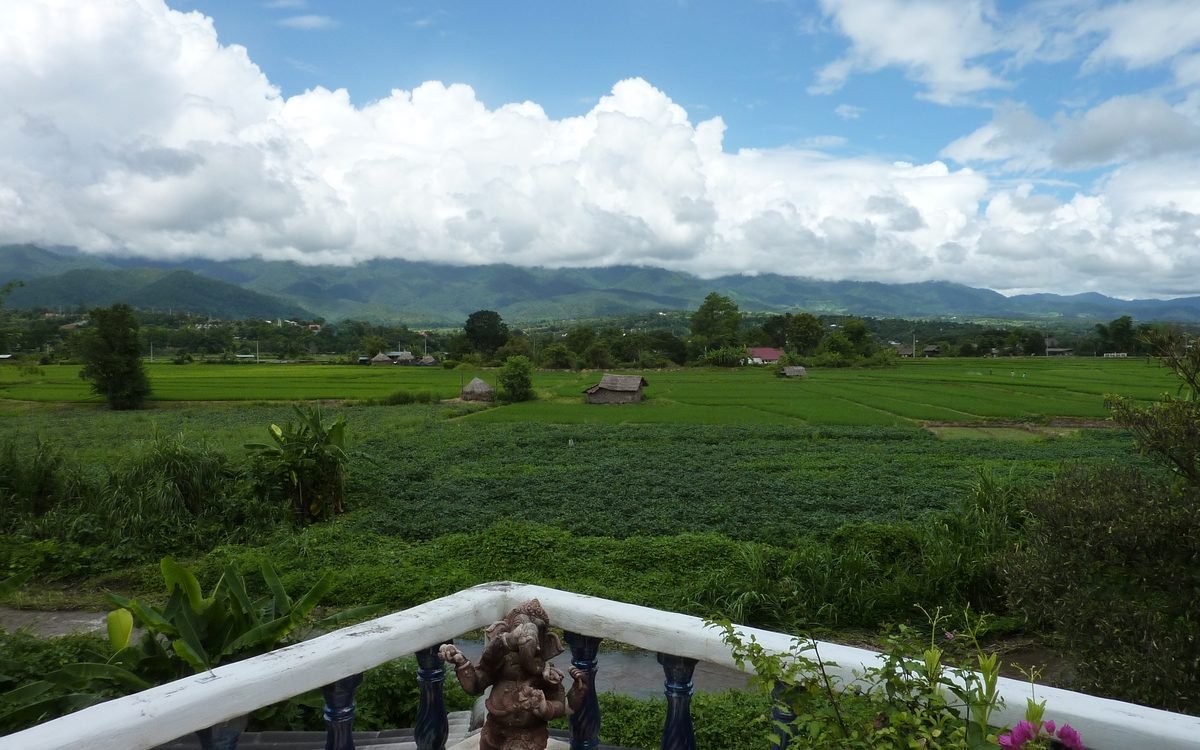
Tucked in a green valley in the Mae Hong Son mountains, Pai is where northern Thailand slows to a hammock-swinging crawl. It has been a backpacker darling for years - reggae bars, riverside bungalows, waterfalls and hot springs - and although it has grown, with more cafes, boutique stays and weekend visitors from Bangkok, the mellow, do-nothing charm survives.
Give it anything from one to three nights: one to see the canyon and walking street, two or three to settle into the rhythm of misty mornings, lazy scooter rides and sunset viewpoints. Part of the fun is the journey itself, as the winding road up from Chiang Mai has a famous 762 curves, and Pai is also a popular stop on the longer Mae Hong Son loop.
🌴 Pai in your trip?
Add it in the trip planner →For each activity you get up-to-date availability and prices — so you book ahead at the best rate.
The only realistic way in is by road from Chiang Mai - a minivan from the Arcade bus station (about 3 hours, roughly 150-250 baht) that swings through all 762 bends, so take motion-sickness tablets if you are prone. Braver travellers ride the route by motorbike, but only with real experience. Onward, minivans continue to Mae Hong Son in around 3 to 4 hours. Once in Pai, the town is tiny and walkable, but the waterfalls, canyon and hot springs are spread out, so rent a scooter (about 100-150 baht a day) or hire a songthaew; take the steep mountain roads seriously, as accidents here are common.
Choices split between the walking-street guesthouses in the middle of the action and the riverside and rice-field bungalows just outside town, where you get valley views, birdsong and a short scoot into the night market. The area across the bamboo bridges over the Pai River is quieter yet still walkable, while hillside resorts to the east have pools and sunrise views. Prices are generally cheap; the trade-off is comfort, so a slightly pricier bungalow with hot water and a decent mattress buys a lot of charm. In the cool season, check that your room has blankets, as nights get surprisingly chilly.
Pai Canyon at sunset is the signature outing - narrow sandy spines you can scramble along (carefully) as the sky turns orange. Cool off at the Mo Paeng or Pam Bok waterfalls, soak in the national park hot springs at Tha Pai, and walk the photogenic Boon Ko Ku So bamboo bridge across the rice fields. The Land Split, where a farmer serves fruit and roselle juice by donation, the White Buddha steps above town and Yun Lai viewpoint at dawn, when mist fills the valley below, round out the classics. Bring water and sturdy shoes, as the canyon trails have steep, unfenced drops.
About an hour north-west near Soppong, Tham Lod is one of the region's great caves, explored by lantern with a local guide and partly by bamboo raft, with thousands of swifts swirling home at dusk. Closer to town, the Yunnanese hilltop village of Santichon serves tea tastings and hearty Chinese-style dishes, and the old Memorial Bridge recalls the Second World War. Wat Nam Hu is known for its revered Buddha image. Many visitors also join a cooking class, a yoga retreat or a gentle river-tubing trip, all easy to book in town and ideal for a slower second or third day.
The nightly Pai Walking Street is the heart of the evening, with khao soi, Shan snacks, smoothies, live music and handicraft stalls filling the main lane, and relaxed reggae and jazz bars along the river afterwards. The best time to visit is November to February, with dry, sunny days, cold nights and misty dawns. March and April bring smoky haze from seasonal burning, which can make the valley hazy and the air unhealthy. From June to October the rains turn everything lushly green and prices drop, though waterfalls swell, trails get muddy and the mountain road demands extra care.
Compare prices from several providers for this place in one click.
All hotels in Pai →1-3 nights to unwind; the winding road from Chiang Mai (762 curves) is an adventure in itself.
Go deeper with our complete Pai guides:
Ready to plan?
Build your Thailand route →