Updated 2026-09-2810 min read
The classic Thailand island hopping route is the Andaman loop: Phuket, Koh Phi Phi, Krabi and Koh Lanta (best November to April), while the Gulf route of Koh Samui, Koh Phangan and Koh Tao works best from February to September. Allow at least 3 nights per island and budget roughly 400-2,500 THB per ferry leg.
Choosing a coast: Andaman, Gulf or east
Thailand's islands sit on three coasts, each with its own weather pattern. Picking the right coast for your travel dates matters more than picking the right island.
| Coast | Main islands | Best months | Wettest months |
|---|
| Andaman Sea (west) | Phuket, Phi Phi, Railay, Lanta, Lipe | November to April | May to October |
| Gulf of Thailand | Samui, Phangan, Tao | February to September | October to December |
| East coast | Koh Samet, Koh Chang, Koh Kood | November to April | June to October |
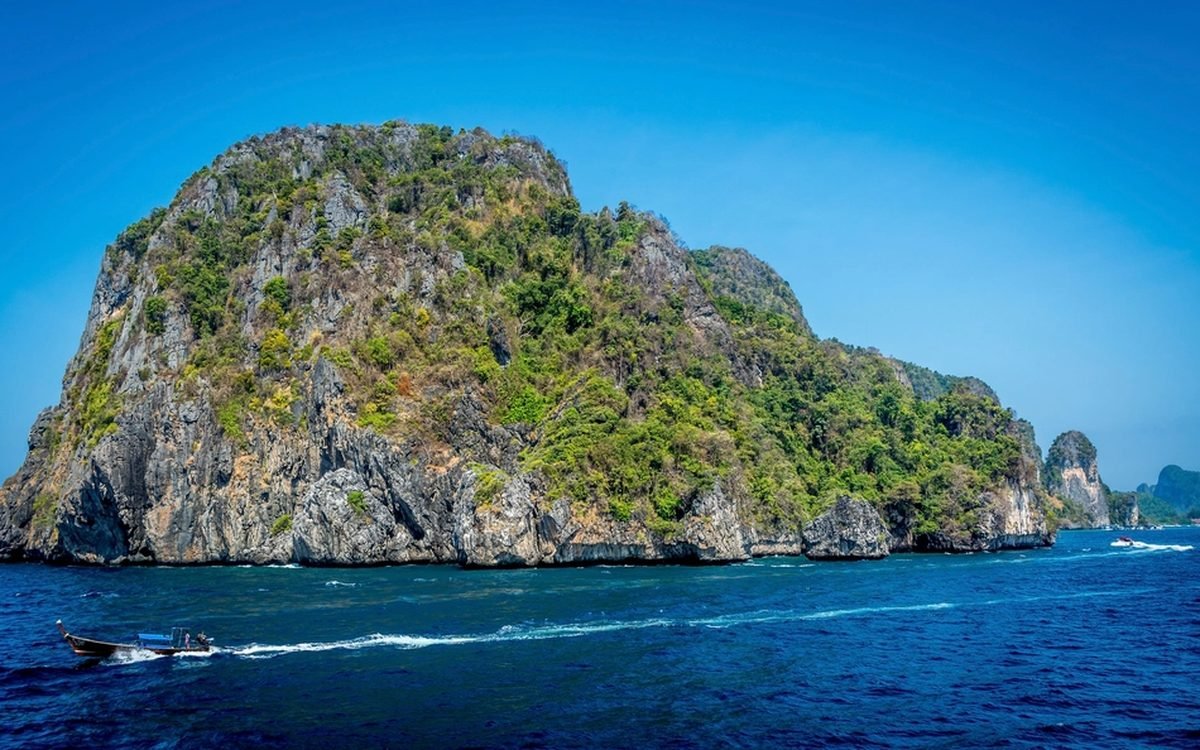
The Andaman side has the dramatic limestone cliffs and the most ferry connections in high season, the Gulf side is the answer for a summer holiday in July or August, and the east coast is easiest to reach from Bangkok without a flight. For month-by-month detail see the best time to visit Thailand.
Which route suits you?
- First trip, dry season: the Andaman classic, with easy connections and the iconic limestone scenery.
- Summer holidays in July or August: the Gulf trio, when the Andaman side is often rough and rainy.
- Quiet beaches and snorkelling: the deep south, from Koh Lanta down to Koh Lipe.
- Short trip or no flights: the east coast, a few hours by road from Bangkok.
- Divers: Koh Tao for courses, and the Similan Islands on a liveaboard from Khao Lak in season.
Route 1: the Andaman classic (10-14 days)
Phuket, Koh Phi Phi, Railay or Ao Nang, Koh Lanta. This is the most popular island hopping route in Thailand, and for good reason: the boat legs are short, the scenery is spectacular and connections are frequent from November to April.
- Phuket (2-3 nights): fly into Phuket International Airport. Stay in Kata or Karon for beaches, or Old Town for food and character.
- Koh Phi Phi (2-3 nights): ferry from Rassada Pier, about 2 hours by big boat, typically 600-1,000 THB. A small island entry fee of around 20 THB is collected on arrival at Tonsai Pier.
- Railay or Ao Nang (2-3 nights): ferry to Ao Nang or directly to Railay, about 1.5-2 hours, roughly 400-700 THB. Railay's cliffs and beaches are only reachable by boat.
- Koh Lanta (3-4 nights): ferry or speedboat, about 1.5-2.5 hours, or a minivan with two short car ferries, around 400-600 THB.
- Fly home from Krabi, about 2 hours by minivan from Lanta.
On Phi Phi, the famous Maya Bay on Phi Phi Leh is part of a national park (entry around 400 THB for foreigners), swimming there is not allowed, and the bay normally closes to visitors for a recovery period around August and September. Read more in our Koh Phi Phi guide and where to stay in Krabi.
Route 2: the Gulf trio (8-12 days)
Koh Samui, Koh Phangan, Koh Tao. Three very different islands linked by short, frequent ferries that run all year, weather permitting.
- Koh Samui (3-4 nights): fly directly from Bangkok (Samui Airport is small and flights cost more), or fly to Surat Thani and take a combined bus and ferry. Samui is the most developed of the three, with resorts, restaurants and good roads.
- Koh Phangan (3-4 nights): 30-60 minutes by ferry or speedboat from Samui, roughly 250-450 THB. Famous for the Full Moon Party at Haad Rin, but the north and west coasts are quiet, with yoga retreats and jungle waterfalls.
- Koh Tao (3-4 nights): 1-2 hours from Phangan, roughly 500-700 THB. One of the world's most popular places to learn to dive, with Open Water courses typically around 11,000-12,000 THB.
- Back to Bangkok: Lomprayah and other operators sell combined boat and bus or boat and train tickets via Chumphon, typically 1,100-1,600 THB, or you can backtrack to Samui for a flight.
Travelling the opposite way works just as well, and starting on Koh Tao by overnight train and ferry from Bangkok is a great budget option. See our Koh Tao, Koh Phangan and Koh Samui guides.
Route 3: the deep south (10-14 days)
Koh Lanta, Koh Ngai, Koh Mook, Koh Kradan, Koh Lipe. This is the quieter, more laid-back version of the Andaman, with white-sand beaches, clear water and far fewer crowds.
- Koh Lanta to the Trang islands: island-hopping speedboats run south from Lanta in high season, stopping at Koh Ngai, Koh Mook and Koh Kradan, roughly 1-2 hours and 800-1,500 THB per leg.
- Koh Mook is home to the Emerald Cave, a tidal sea cave you swim through to a hidden beach. Koh Kradan has some of the best snorkelling straight off the beach.
- To Koh Lipe: the final leg from the Trang islands takes about 2-3 hours by speedboat, roughly 1,500-2,000 THB. Lipe is small, walkable and surrounded by the reefs of Tarutao National Park.
- Getting out: speedboats from Lipe run to Pak Bara pier on the mainland, from where minivans continue to Hat Yai airport, or across to Langkawi in Malaysia.
Many of these speedboat connections only run from about November to April, and some stop entirely in the low season. Our Koh Lanta and Koh Lipe guides have more detail.
Route 4: the east coast from Bangkok (6-10 days)
Koh Samet, Koh Chang, Koh Kood. If you have limited time or want to avoid flying, the eastern islands are reachable by road from Bangkok.
- Koh Samet (2 nights): about 3-4 hours by bus or minivan from Bangkok to Ban Phe pier, then 30-45 minutes by ferry. Samet is part of a national park, and a park fee is charged on arrival.
- Koh Chang (3-4 nights): about 5-6 hours from Bangkok by road to Trat, then a 30-45 minute car ferry from Ao Thammachat or Centrepoint pier, around 80-120 THB. Koh Chang has jungle, waterfalls and long beaches on its west coast.
- Koh Kood (3 nights): speedboats from Koh Chang in high season, or from Laem Sok pier on the mainland, around 1-1.5 hours. Koh Kood is one of the most unspoiled islands in Thailand.
Bangkok Airways also flies from Bangkok to Trat, which cuts the road time for Koh Chang and Koh Kood. See our Koh Chang guide for where to stay.
Ferry tickets, operators and how to book
Most island ferries are run by private operators, and prices vary by boat type. Big car ferries and slow boats are cheapest and most comfortable in rough seas, while speedboats are faster, more expensive and can be bumpy.
- Book 1-3 days ahead in high season, and further ahead around Christmas, New Year and Chinese New Year.
- Joint tickets that combine minivan and boat, including hotel pick-up, are common and convenient, especially on the Andaman side.
- Check what is included: pier transfers, national park fees and luggage limits are often extra.
- Arrive 30-45 minutes early, as boats can leave when full or on schedule, and piers can be chaotic.
- Keep a buffer day before international flights. Boats are cancelled in bad weather, especially in the monsoon months.
You can compare and book many routes online on our transport tickets page. For the mainland legs between the coasts, see getting around Thailand.
Good to knowGetting from the Andaman to the Gulf takes most of a day. A combined minivan and ferry ticket from Krabi or Ao Nang to Koh Samui or Koh Phangan via Surat Thani and Donsak pier takes roughly 6-8 hours. Combining both coasts works best on trips of three weeks or more.
Budget and how long to stay on each island
Island hopping is more expensive than touring the mainland, because every move involves a boat, and accommodation on small islands costs more. As a rough guide:
- Ferry legs: 400-1,000 THB for most short hops, 1,500-2,500 THB for long speedboat legs such as Lanta to Lipe.
- Accommodation: simple bungalows from 800-1,500 THB, comfortable mid-range resorts 2,000-4,500 THB, and luxury beach resorts well above that. Phi Phi and Lipe are pricier than their size suggests.
- Snorkelling day trips: 800-2,000 THB depending on longtail or speedboat.
Resist the temptation to see too many islands. Each move costs half a day, so three nights per island is a good minimum, and two or three islands in ten days is more relaxing than five. Our Thailand trip cost guide has full budgets, and you can search island hotels with live prices, for example via our Koh Lanta hotel search.
Responsible island hopping
Thailand's reefs and beaches are under pressure, and a few simple habits help protect them:
- Use reef-safe sunscreen. Sunscreens containing certain chemicals such as oxybenzone are banned in Thai marine national parks.
- Never stand on or touch coral, and do not feed fish.
- Choose snorkelling and diving operators that brief guests on reef etiquette and limit group sizes.
- Carry a refillable water bottle, as many islands have refill stations and struggle with plastic waste.
- Respect national park rules, including closures such as Maya Bay's seasonal break and the annual closure of the Similan Islands from mid-May to mid-October.
If this is your first time in Thailand, combine one island route with a few days in Bangkok and the north. Our how many days in Thailand guide helps you balance time on the beach with time on the mainland.
Frequently asked questions
What is the best island hopping route in Thailand?
For first-timers, the Andaman route of Phuket, Koh Phi Phi, Railay and Koh Lanta is the easiest and most scenic from November to April. From February to September, the Gulf route of Koh Samui, Koh Phangan and Koh Tao is the better choice.
How much do ferries cost in Thailand?
Most short ferry legs cost 400-1,000 THB, while long speedboat transfers, such as Koh Lanta to Koh Lipe, cost roughly 1,500-2,500 THB.
How many days do you need for island hopping in Thailand?
Plan at least 8-10 days for one coast, with around three nights per island. Combining the Andaman and Gulf coasts works best on trips of three weeks or more.
Can you island hop in Thailand in the rainy season?
Yes, but choose the right coast. The Gulf islands are at their best from February to September, when the Andaman side is wet and some speedboat routes stop running.
Do I need to book ferries in advance?
In high season, book 1-3 days ahead, and earlier around Christmas and New Year. Outside peak periods, you can usually buy tickets the day before.
Keep reading