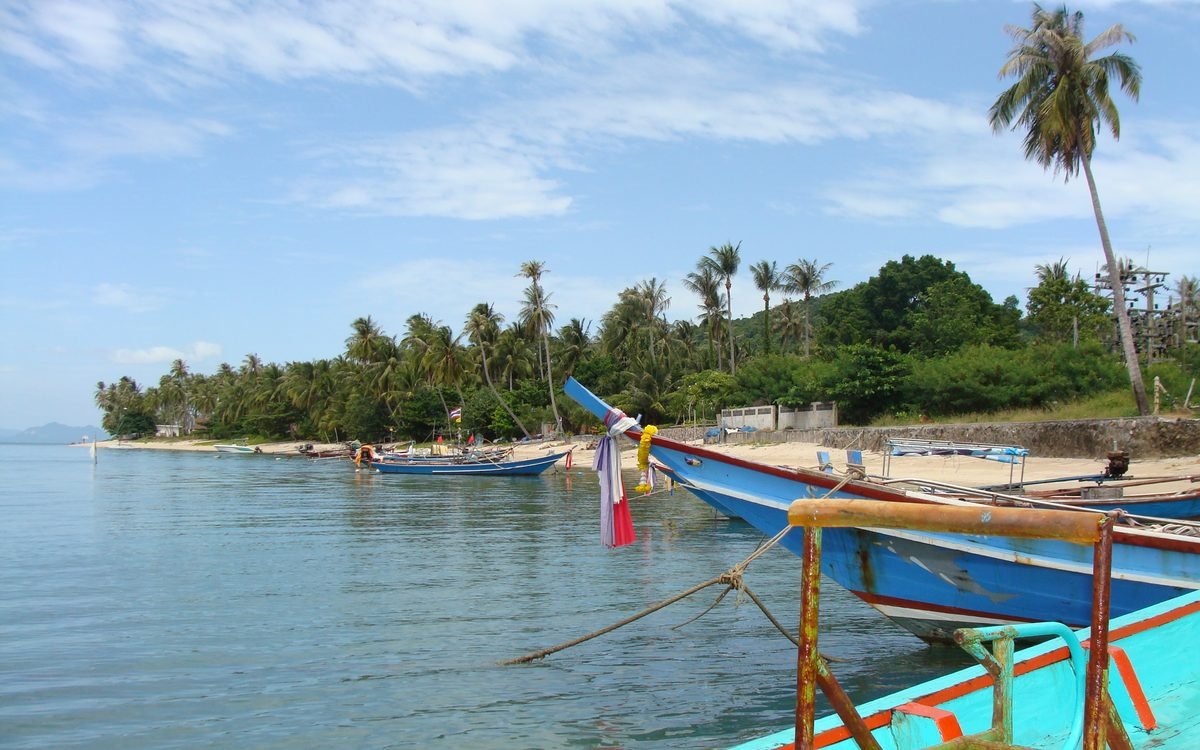
The best things to do in Koh Samui are a boat trip to Ang Thong National Marine Park, the Big Buddha and Wat Plai Laem, the Friday walking street in Fisherman's Village, beach days at Chaweng, Lamai and Silver Beach, and the Na Muang waterfalls. Plan 4-5 days, ideally between January and August when the Gulf is calm and dry.
Koh Samui is Thailand's second-largest island, about 25 km across, with a ring road (Route 4169 and 4170) that loops the whole coast in roughly 90 minutes without stops. It is more polished than its Gulf neighbours: an international airport, big resorts, good restaurants and proper hospitals, but also quiet coconut-palm coastline once you leave the busy east.
Think of the island in four parts. The east coast (Chaweng and Lamai) has the long beaches, nightlife and most restaurants. The north coast (Bophut, Maenam, Choeng Mon, Big Buddha Beach) is calmer and home to Fisherman's Village and the ferry piers to Koh Phangan. The south and west (Taling Ngam, Lipa Noi, Nathon) are quiet, local and famous for sunsets. The interior is jungle hills with waterfalls and viewpoints.
A good rhythm is one boat day, one inland day with a scooter or driver, one temple-and-market day, and the rest on the beach. Four to five days covers the highlights; see how many days you need in Thailand if Samui is one stop on a longer route.
Samui's weather runs opposite to Phuket's. The driest, calmest months are roughly January to August. October to early December brings the north-east monsoon, with the heaviest rain in November and some cancelled boat trips. Check the best time to visit Thailand before you book.
If you only do one excursion, make it Ang Thong. The marine park is an archipelago of 42 limestone islands about 30 km west of Samui, with sheer cliffs, hidden lagoons and white-sand coves that look more like Phang Nga Bay than the Gulf.
A typical full-day trip leaves Nathon or Bophut around 07:30-08:00 and returns around 17:00. The two highlights are the steep climb to the viewpoint on Koh Wua Talap (about 500 m of rocky steps, 40-60 minutes up, wear proper shoes) and the Emerald Lake (Talay Nai) on Koh Mae Ko, a saltwater lagoon enclosed by cliffs and fed by the sea through underground tunnels. Most tours add kayaking and a snorkel stop.
The park is sometimes closed for a few weeks in the monsoon (usually November to mid-December). Visibility for snorkelling is better around Koh Tan and Koh Madsum in the south, or on a day trip towards Koh Tao.
Samui's temples are small, colourful and easy to combine in one morning on the north-east corner.
Cover shoulders and knees at temples and remove shoes before entering halls. Our temple etiquette guide explains the rest.
Samui's beaches differ a lot in atmosphere, so pick your favourites for day trips even if you stay elsewhere.
| Beach | Vibe | Best for |
|---|---|---|
| Chaweng | Long, busy, lively | Swimming, bars, restaurants |
| Lamai | Wide bay, relaxed but lively | Mid-range stays, Sunday market |
| Silver Beach (Crystal Bay) | Small cove with boulders | Snorkelling, clear water |
| Choeng Mon | Sheltered, family-friendly | Calm swimming, kids |
| Bophut | Village charm, softer sand | Evening strolls, dining |
| Maenam | Long, quiet, local | Budget, peace and quiet |
| Lipa Noi / Taling Ngam | Shallow, west-facing | Sunsets, empty sand |
Chaweng has the best swimming sand on the island, but the north end is shallow at low tide. Silver Beach, between Chaweng and Lamai, is the prettiest small cove for snorkelling straight off the sand. For sunset, head to the west coast: Lipa Noi and the beach bars around Taling Ngam face the sun as it drops behind Ang Thong.
Where you sleep matters more on Samui than on many islands, because taxis are expensive. Our where to stay in Koh Samui guide compares every area.
The interior is steep and green, and a half day up here is a welcome break from the beach.
Hill roads are steep and often wet. If you are not an experienced rider, book a jeep tour (around 1,200-1,800 THB) or hire a driver for half a day rather than rent a scooter. Read our Thailand safety guide on scooter licences and insurance first.
Evening markets are where Samui feels most local and cheapest. Each has a fixed day, so plan around them:
Expect 40-80 THB for noodle dishes and skewers, 50-80 THB for mango sticky rice and 60-100 THB for fresh coconuts or fruit shakes. See our Thai street food guide for what to order.
Samui is not a top dive destination itself, but it is a good base. Day trips to the Koh Tao and Koh Nang Yuan area (roughly 2,500-3,500 THB by speedboat) give the best snorkelling in the Gulf. Closer to home, Koh Tan and Koh Madsum off the south coast have shallow reefs, calm water and long sandbars, and trips from Thong Krut pier cost around 1,000-1,500 THB.
Certified divers can join boats to Sail Rock, one of the Gulf's best sites for big schools of fish and occasional whale sharks. Beginners should consider learning on Koh Tao, which is cheaper and built around dive schools; see things to do in Koh Tao.
On the beaches, kayaks and stand-up paddleboards rent for about 200-400 THB an hour on Chaweng and Lamai. Avoid jet skis: operators are unregulated and damage-claim scams are common.
Samui has a strong food scene, from beach shacks to fine dining. For good local food, try the seafood restaurants along Bang Rak and Bophut, the khao man gai and noodle shops in Nathon, and the Hua Thanon fishing village south of Lamai, a Muslim community with excellent curries and grilled fish.
A half-day Thai cooking class (about 1,500-2,500 THB) usually includes a market visit and four or five dishes. Muay Thai fights are held several nights a week at Chaweng Stadium and Phetch Buncha Stadium, with seats roughly 1,500-2,500 THB. Many gyms offer beginner training sessions for around 400-600 THB.
Samui is also Thailand's wellness island. A one-hour Thai or oil massage costs 300-500 THB in a local shop, and resort spas and detox retreats charge far more. Book ahead for high season (July-August and Christmas-New Year).
Skip buffalo fights, monkey shows and elephant rides, which are still advertised on Samui. They involve captive-animal entertainment. If you want to see elephants, read our ethical elephant sanctuary guide.
Koh Phangan is 30-60 minutes away by ferry from Bophut, Big Buddha or Maenam piers, and makes an easy day trip for its quieter beaches such as Bottle Beach and Thong Nai Pan (see things to do in Koh Phangan). Koh Tao is 1.5-2.5 hours by high-speed catamaran. Timetables and prices are on our transport tickets page.
Getting around, songthaews (shared pick-up trucks) run the ring road by day for about 50-100 THB per ride, but they will quote tourists more. Taxis are expensive by Thai standards: Chaweng to the airport is about 300-500 THB and Chaweng to Nathon 600-800 THB. Grab and Bolt now operate on the island and are usually cheaper. Scooters rent for 200-300 THB a day. Our getting around Thailand guide covers the options in detail.
Ready to book? Browse hotels in Koh Samui with live prices, or start from the Koh Samui destination guide.
Four to five days is ideal: one Ang Thong boat trip, one day inland for waterfalls and viewpoints, one temple and market day, and the rest on the beach. Add two or three days for Koh Phangan or Koh Tao.
January to April is the best overall, with dry weather and calm seas, and July-August is also good. October to early December is the rainy season, with the heaviest rain in November.
It is pricier than most Thai islands, mainly because of accommodation, flights and taxis. Street food, night markets and scooter rental keep daily costs reasonable if you avoid resort restaurants.
Yes. It is the best day trip from Samui, with the Koh Wua Talap viewpoint, the Emerald Lake on Koh Mae Ko, kayaking and snorkelling. Budget around 1,800-2,500 THB plus the 300 THB park fee.
Every Friday evening from around 17:00 to 23:00 in Bophut. Maenam has a walking street on Thursday and Lamai on Sunday.