Choose Phuket for the best swimming beaches, the widest choice of hotels, nightlife and easy international flights. Choose Krabi for dramatic limestone scenery, Railay, rock climbing and a quieter, more laid-back feel. They are only 2.5-3 hours apart, so many travellers combine both.
Phuket and Krabi sit on opposite sides of Phang Nga Bay on Thailand's Andaman coast, about 165 km apart by road. They share the same weather, the same turquoise sea and many of the same boat trips, yet they feel very different. Phuket is a large, developed island with an international airport, big resorts and a busy nightlife scene. Krabi is a mainland province whose main beach base, Ao Nang, is smaller and calmer, surrounded by towering karst cliffs and offshore islands.
| Factor | Phuket | Krabi (Ao Nang and Railay) |
|---|---|---|
| Beaches for swimming | Excellent: long sandy beaches such as Kata, Karon, Nai Harn | Mixed: Ao Nang is average, Railay West and Phra Nang are superb |
| Scenery | Green hills and bays | Spectacular limestone cliffs and islands |
| Atmosphere | Busy, varied, resort-heavy | Relaxed, smaller scale |
| Nightlife | Big (Patong's Bangla Road, beach clubs) | Low-key bars, Railay's reggae bars |
| Hotels | Huge range, from hostels to top luxury | Good mid-range, fewer high-end options |
| Flights | Many direct international flights (HKT) | Mostly domestic, some regional (KBV) |
| Price level | Higher | Around 10-25% lower |
Both are at their best from roughly November to April, when the sea is calm and clear. From May to October the south-west monsoon brings rain showers, swell and red-flag beaches to both, although prices fall sharply.
If long, sandy beaches with easy swimming are your priority, Phuket is the stronger choice. Its west coast offers a beach for every mood: lively Patong, family-friendly Kata and Karon, local-favourite Nai Harn in the south, and upmarket Surin, Kamala and Bang Tao further north. Most have soft sand, gently shelving water in high season and plenty of restaurants behind them.
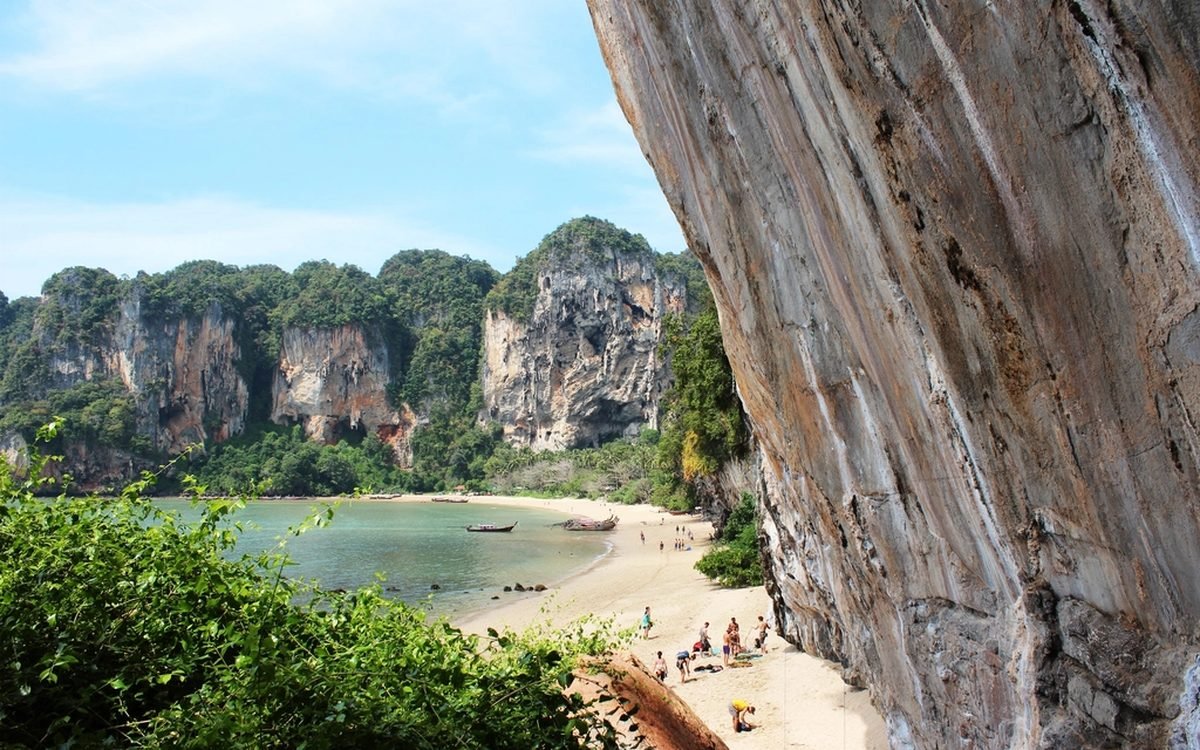
Krabi's main town beach, Ao Nang, is pleasant but not its best feature: the water can look murky and the sand narrows at high tide. Krabi's real beaches are reached by longtail boat. Railay West and Phra Nang Cave Beach, framed by sheer cliffs and only accessible by sea, are among the most beautiful in Thailand. Quieter Klong Muang and Tubkaek, 20-30 minutes north of Ao Nang, have calm water and resorts facing the islands.
Longtail boats from Ao Nang to Railay cost about 100-150 THB per person and leave when 6-8 passengers are ready. At low tide you may wade to the boat, so pack a dry bag. Boats stop running in the evening, so check the last departure time.
Both bases give access to the classic Andaman boat trips, but the distances differ.
Krabi feels more like an outdoor adventure; Phuket offers more variety, culture and food on the island itself. For the full list on the Krabi side, read things to do in Krabi.
Phuket has far more going on after dark. Patong's Bangla Road is loud, neon-lit and open until the early hours; it is not everyone's taste, but you can easily avoid it by staying elsewhere. Beach clubs in Bang Tao and Kamala, rooftop bars, night markets and a growing cocktail scene in Phuket Old Town give plenty of alternatives.
Krabi's nightlife is gentle. Ao Nang has a strip of bars and live music, and Railay has a handful of relaxed reggae bars on the east side. Most visitors are in bed early to catch the morning boats. If a lively night out matters to you, Phuket wins; if you want quiet evenings, sunset drinks and early starts, Krabi suits you better.
For the same standard, expect to pay somewhat more in Phuket, especially on the west-coast beaches in high season. As a rough guide for December to March:
| Room type (per night) | Phuket | Krabi (Ao Nang) |
|---|---|---|
| Hostel dorm bed | 350-600 THB | 300-500 THB |
| Simple double room | 1,000-1,800 THB | 900-1,500 THB |
| Good mid-range hotel with pool | 2,500-5,000 THB | 2,000-4,000 THB |
| Luxury resort | 8,000-30,000+ THB | 6,000-20,000 THB |
Food follows the same pattern: a Thai meal costs about 80-150 THB in local restaurants in either place, but tourist restaurants on Patong or Kata beach roads can charge double. Getting around is expensive in Phuket, where taxis and tuk-tuks are notoriously pricey; Grab is cheaper. In Ao Nang, songthaews run along the main road for 60-100 THB. For area advice, see our guides to where to stay in Phuket and where to stay in Krabi.
Phuket International Airport (HKT) has direct flights from Europe (seasonal), the Middle East, Asia and Australia, plus dozens of domestic services a day. It sits in the north of the island, 45-75 minutes from the southern beaches. Krabi International Airport (KBV) is mainly domestic with some regional flights, but it is only 25-35 minutes from Ao Nang. From Bangkok, both are about 1 hour 20 minutes by air.
Travelling between the two is easy:
If you are arriving from Bangkok or Chiang Mai, a neat trick is to fly into one airport and out of the other, which avoids backtracking and often costs no more than a return ticket.
Between May and October, the Andaman coast gets the south-west monsoon. Days are rarely washed out completely; a typical pattern is sunshine in the morning and a heavy shower in the afternoon, with September and October the wettest months. But the sea is rougher, visibility drops and many west-facing beaches fly red flags because of rip currents.
Phuket handles the low season better. It has more to do on land, from Old Town cafés and museums to cooking classes, spas, malls and water parks, and its larger ferries keep running to Phi Phi in most weather. Some beaches such as Nai Harn and Kata also attract beginner surfers when the swell arrives. In Krabi, rough seas can cancel longtail boats to Railay and island tours, and several resorts on smaller islands close for a few months. On the plus side, hotel rates in both drop by 30-50%, and the limestone landscape of Krabi is at its greenest. If you are travelling in low season, Phuket is the safer single base, while Krabi rewards flexibility.
Choose Phuket if this is a short beach holiday, you want great swimming beaches on your doorstep, you are flying in directly from abroad, you are travelling with young children, or you want nightlife, shopping and a big choice of restaurants.
Choose Krabi if scenery matters most, you like active days of kayaking, climbing and island hopping, you prefer a quieter base, or your budget is tighter.
With a week or more, combining them is the best answer. A popular route is 3-4 nights in Phuket, the ferry via Phi Phi, then 3-4 nights in Ao Nang or Railay, flying out of Krabi. Add Koh Lanta or Koh Yao Noi for a slower final few days. Our trip planner can map the route and suggest the right number of nights for each stop.
Phuket is easier for a first visit thanks to direct flights, lots of hotels and good infrastructure. Krabi is better if you want dramatic scenery and a calmer base, and many first-timers visit both.
Generally yes. Rooms, local transport and tours are typically 10-25% cheaper in Krabi, especially compared with Phuket's west-coast beaches in high season.
Phuket has more good swimming beaches, such as Kata, Karon and Nai Harn. Krabi's best beaches, Railay West and Phra Nang, are more spectacular but are reached by boat.
By minivan or taxi in about 2.5-3 hours, or by ferry from Rassada Pier to Ao Nang or Railay in 2-4 hours, sometimes stopping at Koh Phi Phi. Minivans cost around 350-500 THB per person.
Yes. Day trips and ferries to Koh Phi Phi run from both, but the crossing is shorter from Krabi, about 45 minutes by speedboat compared with around an hour from Phuket.