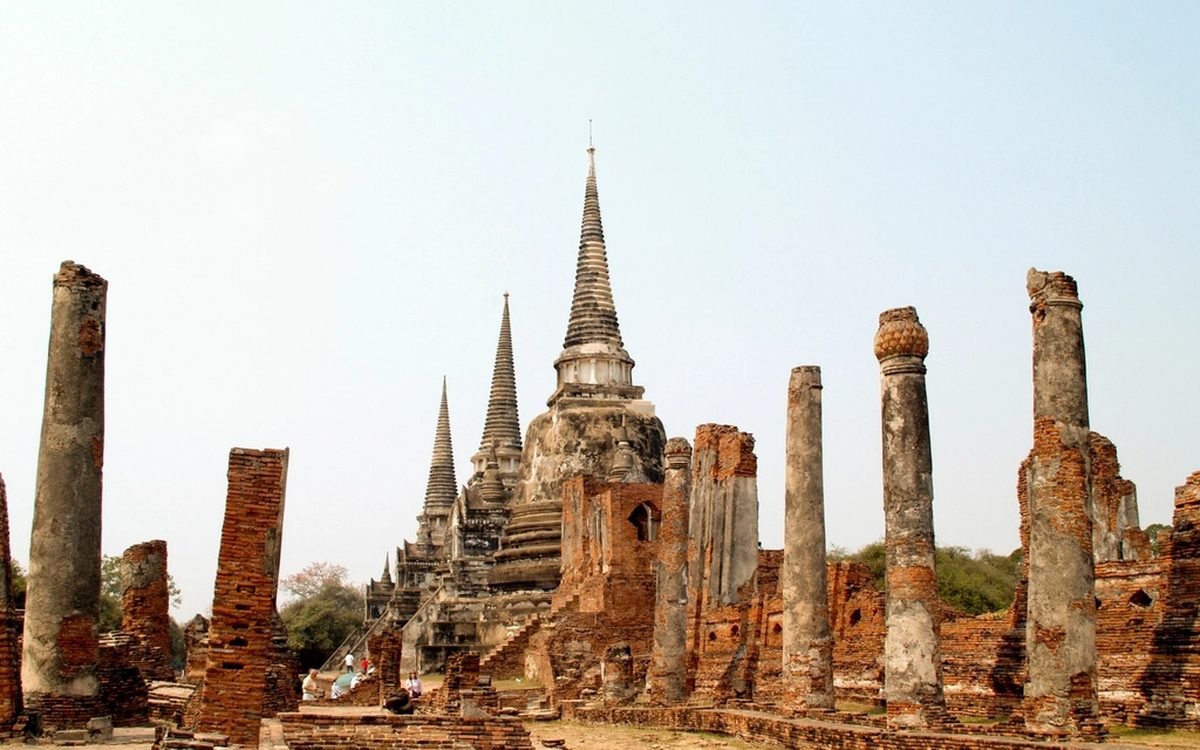
An Ayutthaya day trip from Bangkok is easy: take the train (about 1.5-2 hours, from 15-20 THB), a minivan or a private driver, then tour the ruined temples of the old capital by tuk-tuk or bicycle. Prioritise Wat Mahathat, Wat Phra Si Sanphet and Wat Chaiwatthanaram, start early to beat the heat, and allow 6-8 hours on site.
Ayutthaya was the capital of Siam for more than four centuries, from 1351 until it was sacked by the Burmese army in 1767. At its height it was one of the largest cities in the world, a trading hub visited by Chinese, Persian, Japanese, Portuguese, Dutch and French merchants. The capital later moved south to Thonburi and then Bangkok, leaving behind hundreds of temples in brick and stucco.
Today the old city sits on an island formed by three rivers, around 80 km north of Bangkok, and its ruins are protected as the Ayutthaya Historical Park, a UNESCO World Heritage Site since 1991. The mood is very different from Bangkok's glittering temples: headless Buddhas, leaning prangs and weathered chedis among lawns and ponds, with a busy modern town growing around them. It is the easiest and most rewarding day trip from the capital.
Ayutthaya is hot, with little shade between the ruins. Start by 8am, carry water, wear a hat and sunscreen, and plan an air-conditioned lunch break. Temples are active religious sites: cover shoulders and knees, and see our temple etiquette guide.
You have four realistic options, each with its own trade-off between price, comfort and flexibility.
| Option | Time | Cost | Best for |
|---|---|---|---|
| Train | 1.5-2 hours | 15-20 THB third class; more for seats in faster trains | Budget travellers who like the ride |
| Minivan | 1-1.5 hours | 60-100 THB | Speed on a budget |
| Grab or taxi | 1-1.5 hours | about 1,000-1,500 THB one way | Couples or families wanting door to door |
| Private driver for the day | 1-1.5 hours each way | about 2,500-3,500 THB per car | Groups; includes Bang Pa-In easily |
By train: dozens of northbound trains stop at Ayutthaya each day. Some leave from the new Krung Thep Aphiwat Central Terminal and some ordinary and commuter services still use the old Hua Lamphong station, so check the State Railway of Thailand timetable the day before. Third-class tickets are bought at the station on the day, with fans and open windows. On the way back, trains can run late; allow a margin if you have evening plans.
By minivan: vans leave the Northern Bus Terminal (Mo Chit) when full and drop you in town near the ruins, which saves the river crossing from the station. By driver: the most comfortable choice in the heat, as the car waits while you visit each temple. Compare fixed-price options on our transport tickets page. For more on trains and vans, see getting around Thailand.
Ayutthaya's train station is on the east bank, opposite the island. Walk a couple of minutes to the small pier and take the cross-river ferry (a few baht) to reach the town, where bicycle rental and tuk-tuks are waiting.
There are dozens of ruins, but on a day trip these are the essentials. Main temples open roughly 8am-6pm; entry to most is 50 THB each for foreigners, and a combined ticket of about 220 THB covers six of the major sites, including Wat Mahathat, Wat Ratchaburana, Wat Phra Si Sanphet and Wat Chaiwatthanaram.
If you have time or want to escape the sun, these add depth to the day:
You will see elephants carrying tourists around the historical park. We recommend skipping the rides; if you want to see elephants responsibly, read our ethical elephant sanctuary guide.
Ayutthaya has a few specialities that are worth planning a meal around:
In the evening, locals head to the night markets in the town centre, including the one at Bang Lan. More ideas in our food in Thailand guide.
This plan works by train or minivan with a tuk-tuk on arrival, and is easily shortened if you tire in the heat.
If you prefer not to arrange anything yourself, organised tours from Bangkok cost roughly 1,200-2,500 THB with an air-conditioned minivan, guide and lunch. Some combine Ayutthaya with Bang Pa-In, and a few return by river cruise on the Chao Phraya, which is slower but scenic. The downside is the timing: most tours arrive late morning, in the heat and with the crowds.
Staying one night is the best way to see Ayutthaya. You can see the ruins at sunrise, watch Wat Chaiwatthanaram at sunset and see several temples lit up in the evening without rushing back. Hotels are much cheaper than in Bangkok, including riverside guesthouses with temple views; compare hotels in Ayutthaya.
Ayutthaya also works as the first stop on the way north. Trains to Chiang Mai stop here, so you can visit and then board an overnight sleeper, or continue to Sukhothai, Thailand's earlier capital. See our Bangkok to Chiang Mai guide, and fit the day into Bangkok in 3 days if you are based in the capital.
Yes. It is the most rewarding day trip from Bangkok, a UNESCO-listed former capital with dramatic temple ruins only 1-2 hours away by train, van or car.
The train. Third-class tickets cost about 15-20 THB and the trip takes 1.5-2 hours. Minivans from Mo Chit are also cheap at 60-100 THB and slightly faster.
Most major temples charge foreigners 50 THB each, with a combined ticket of about 220 THB covering six main sites. Some temples, such as Wat Lokayasutharam, are free.
A full day of 6-8 hours covers the main temples. Stay overnight if you want sunrise and sunset at the ruins without rushing back to Bangkok.
Light clothing that covers your shoulders and knees, comfortable shoes, a hat and sunscreen. The ruins are active religious sites and there is little shade.