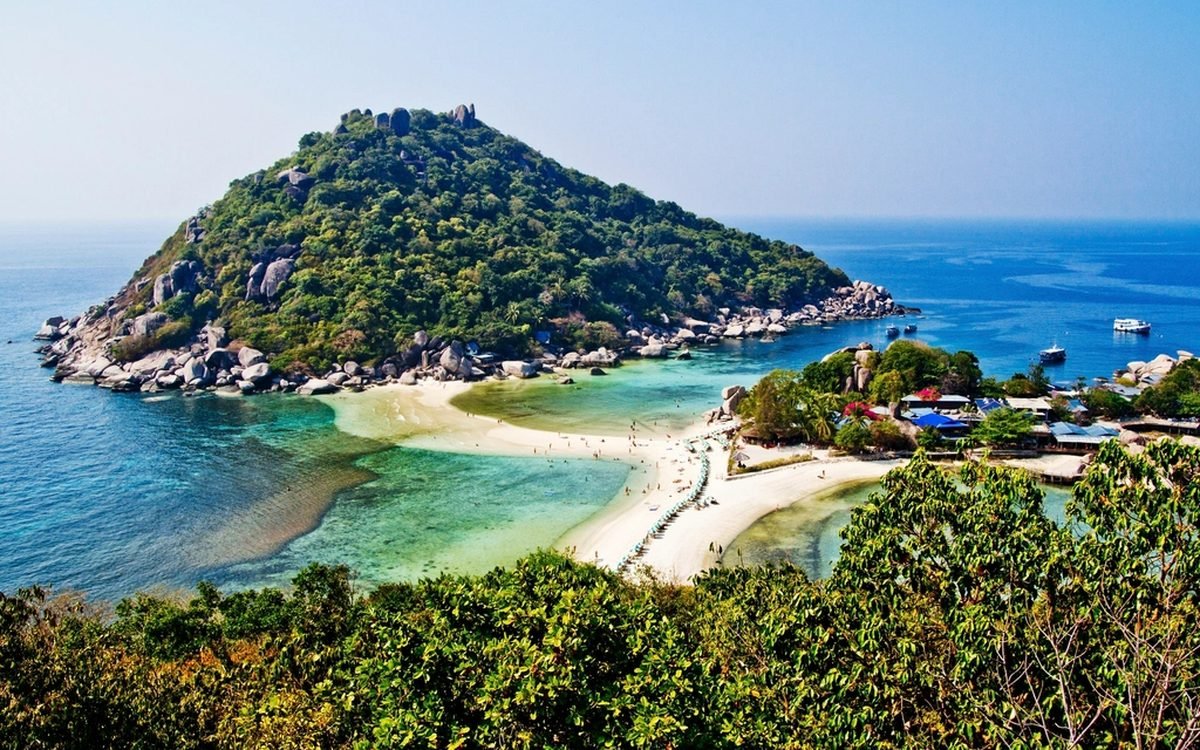
Koh Tao is one of the cheapest and easiest places in the world to learn to dive: a PADI or SSI Open Water course costs about 11,000-12,500 THB (around €290-330) and takes 3-4 days, with warm, calm water and dozens of sites within 30 minutes by boat. The best conditions are roughly March to September.
Koh Tao has built its whole economy around diving, and for a beginner that works in your favour. The island has dozens of dive schools competing on a small patch of sand, so prices are among the lowest anywhere, instructors are used to nervous first-timers, and courses run every day of the year. The sites themselves are shallow and sheltered, the water sits at 27-30°C, and most boats reach their first site in 10-30 minutes.
This is not the place for dramatic wall dives or strong-current drifts. What Koh Tao offers is relaxed, forgiving diving over granite boulders and hard coral, with good fish life, frequent turtles and the chance of a whale shark on the offshore pinnacles. If you want world-class visibility and manta rays, the Similan Islands on the Andaman coast are the step up once you are certified.
Prices are fairly standardised across the island, so a school that is dramatically cheaper deserves some scrutiny. Typical 2025-2026 prices, including equipment, boat dives and certification:
| Course or dive | Duration | Max depth | Typical price |
|---|---|---|---|
| Try dive (Discover Scuba) | Half day to 1 day | 12 m | 2,000-3,000 THB |
| Open Water Diver (PADI or SSI) | 3-4 days | 18 m | 11,000-12,500 THB |
| Advanced Open Water | 2-3 days | 30 m | 9,500-11,000 THB |
| Rescue Diver (plus first aid) | 3-4 days | - | 10,000-13,000 THB |
| Fun dive (certified divers) | per dive | by level | 900-1,200 THB |
| Divemaster training | 4-8 weeks | - | from about 30,000 THB |
Many schools include a few nights in a fan or basic air-conditioned room with a course, or give discounts at partner bungalows. Fun dives get cheaper in packages of five or ten, and night dives or trips to Sail Rock cost extra. Budget separately for dive insurance if your travel policy does not cover it; see our Thailand trip cost guide for the rest of your budget.
The Open Water Diver course is the entry-level certification recognised worldwide, and on Koh Tao it usually follows the same rhythm:
You can save time by completing the theory online before you arrive. Before any training you fill in a medical questionnaire; if you answer yes to anything (asthma, heart conditions, recent surgery, some medications) you need a doctor's sign-off, which a clinic on the island can usually provide for a fee. The minimum age is 10 for a Junior Open Water certificate.
PADI or SSI? Both are recognised worldwide and teach the same skills to the same standards. The instructor matters far more than the agency.
Visibility typically ranges from 10 to 30 metres depending on season, plankton and weather.
Koh Tao can be dived all year, but conditions vary:
| Months | Conditions |
|---|---|
| March to May | Calm, hot, often good visibility. A popular window for whale sharks. |
| June to September | Generally good diving, busiest season, some windy days on the west coast. |
| October | Variable. Whale sharks are sometimes seen again as plankton increases. |
| November to mid-December | Monsoon rain and rougher seas, lower visibility, occasional cancelled boats. |
| Late December to February | Improving, cooler water, some choppy days. |
Whale sharks are never guaranteed; some years bring regular sightings, others very few. See the best time to visit Thailand for how the Gulf weather differs from Phuket and Krabi.
With so many schools, the choice can feel random. These checks sort the good from the rest:
Walk along Sairee Beach, visit two or three schools, and go with the one where you felt listened to. Price differences are small; the quality of your instructor shapes whether you enjoy diving for life.
Diving on Koh Tao has a good safety record, but a few rules keep it that way:
Most dive boats offer spare spaces to snorkellers for a few hundred baht, a good option for non-diving partners. The best things to do on Koh Tao covers everything else on the island.
Many people finish their Open Water course, fall in love with it and stay on. The logical next step is the Advanced Open Water course: five adventure dives over two or three days, including a deep dive to 30 metres and a navigation dive, plus three electives such as wreck, night or peak performance buoyancy. It is the certification that opens up Chumphon Pinnacle, Sail Rock and the HTMS Sattakut properly, and on Koh Tao it costs less than almost anywhere in Europe.
Other popular options are the Enriched Air (Nitrox) speciality, which gives you longer bottom times on repetitive dives, and Rescue Diver, which many divers call the most useful course they ever took because it teaches you to spot and solve problems before they become emergencies.
If you prefer silence to bubbles, Koh Tao is also one of Asia's main freediving centres. A two to three day beginner course costs roughly 6,000-9,000 THB and teaches relaxation, breath-hold technique and safe diving to 10-20 metres on a single breath. Freediving works well for people who find scuba equipment claustrophobic, and it pairs naturally with snorkelling the island's bays.
Divers with long-term plans sometimes take on a Divemaster internship, the first professional level. Choose carefully: a good programme offers real supervised experience with customers, not just unpaid work carrying tanks.
Give yourself a minimum of five nights for an Open Water course, a week if you want to continue straight to Advanced or add fun dives. Book your course a few days ahead in July, August and around Christmas; the rest of the year you can simply walk in.
Stay near your dive school, as boats leave early and the island's hills make getting around slow. Most schools are on Sairee Beach, with a smaller cluster at Chalok Baan Kao. Compare hotels on Koh Tao, then book the ferry via our transport tickets page. Many divers combine the island with Koh Phangan and Koh Samui; our island-hopping routes show how to link them.
Expect about 11,000-12,500 THB (roughly €290-330) for a PADI or SSI Open Water course in 2026, including equipment, boat dives and certification. Many schools also include a few nights of basic accommodation.
The Open Water course takes three to four days. Plan at least five nights on the island so you have a buffer for bad weather or ear problems, plus time before flying.
Whale sharks are most often reported between March and May and again around September and October, mainly at Chumphon Pinnacle, Southwest Pinnacle and Sail Rock. Sightings are never guaranteed.
Yes. The water is warm and calm, most sites are shallow and sheltered, and instructors are very experienced with first-time divers, which makes Koh Tao one of the best places in the world to learn.
Both are recognised worldwide and teach the same skills to the same standards. Choose based on the school and instructor rather than the agency.
November to mid-December brings the Gulf monsoon, with heavy rain, rougher seas and lower visibility. Diving continues, but some boats are cancelled.