Home › Destinations › Lopburi
Central Thailand
Lopburi
An ancient Khmer and royal city where hundreds of monkeys rule the ruins, easily reached by train from Bangkok or Ayutthaya.
📅 1–1 nightsCultureAuthenticNature
An ancient Khmer and royal city where hundreds of monkeys rule the ruins, easily reached by train from Bangkok or Ayutthaya.
Why Lopburi? An ancient Khmer and royal city where hundreds of monkeys rule the ruins, easily reached by train from Bangkok or Ayutthaya.
Lopburi is one of Thailand's oldest cities, a former Khmer outpost that became King Narai's second capital in the 17th century. Today it is best known for its monkeys: hundreds of long-tailed macaques live among the ruins of Phra Prang Sam Yot and roam the surrounding streets. Beyond the photo opportunities there is a compact old town of Khmer temples, a royal palace-museum and quiet colonial-era corners.
It suits history lovers, rail travellers and anyone breaking the journey between Bangkok, Ayutthaya and the north. One night is ideal: arrive in the afternoon, see the ruins in the golden light, and finish the palace and museum the next morning before catching an onward train.
🌴 Lopburi in your trip?
Add it in the trip planner →For each activity you get up-to-date availability and prices — so you book ahead at the best rate.
Lopburi lies about 150 km north of Bangkok. Trains from Bangkok take around 2.5-3.5 hours and are the most enjoyable way to arrive, as Lopburi Railway Station sits right in the old town, opposite Wat Phra Si Rattana Mahathat. From Ayutthaya the train takes roughly 1-1.5 hours, and many northbound trains to Phitsanulok and Chiang Mai stop here too. Minivans and buses run from Bangkok's Mo Chit terminal to the newer part of town. The historic centre is small enough to explore on foot, with samlors and songthaews for longer hops.
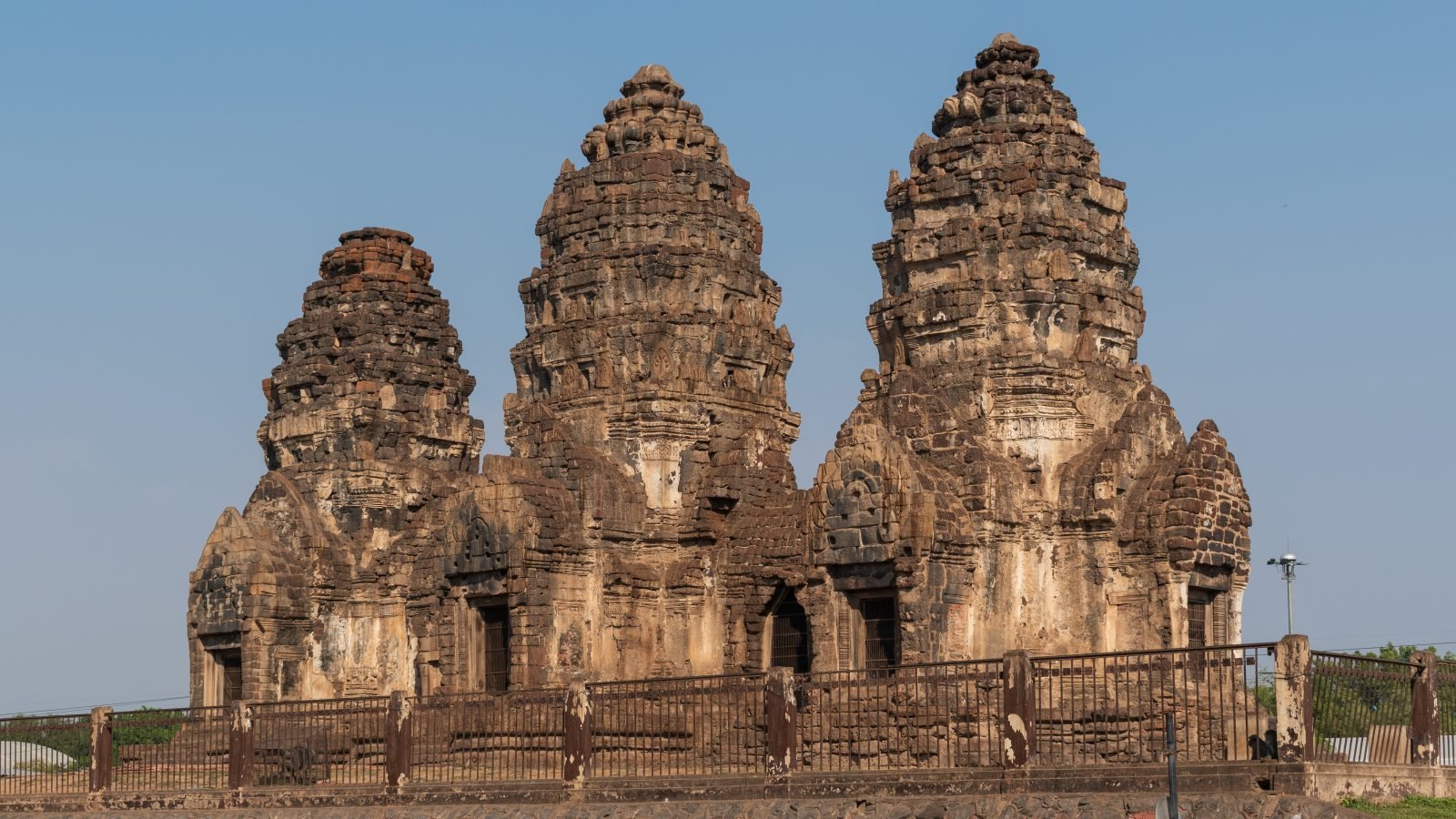
Start at Phra Prang Sam Yot, three linked laterite towers built in the Khmer style, and the adjacent shrine of San Phra Kan. Then walk to Phra Narai Ratchaniwet, the walled palace where King Narai received foreign envoys; its museum displays Lopburi-style Buddha images and royal artefacts. Nearby, the ruins of Ban Wichayen recall the European diplomats who lived here, and the small brick Prang Khaek is one of the oldest structures in town. Most sites charge a modest entry fee and close in the late afternoon.
Lopburi's macaques are wild, bold and very used to people. They live freely around Phra Prang Sam Yot and nearby buildings, climbing on cars, cables and visitors. Keep sunglasses, hats, phones and bags secured, do not carry food or plastic bags, and never feed or tease them - bites and scratches do happen. Staff at the shrine sometimes lend sticks to keep monkeys at a distance. Each year in late November the town holds the Monkey Buffet Festival, when a lavish spread of fruit is laid out for them as thanks for bringing visitors to Lopburi.
If you have your own transport, the countryside around Lopburi is surprisingly rewarding. From roughly November to January, sunflower fields bloom across the province and draw Thai day-trippers. The vast Pa Sak Jolasid Dam reservoir lies about an hour away, where a special excursion train runs across the water on selected days in the cool season. At dusk, bats stream out of the limestone hill at Wat Khao Wong Kot. In the evening, the town's night market offers simple noodles, grilled meats and Thai sweets.
The cool, dry months from November to February are best, combining pleasant sightseeing weather with the sunflower season and the late-November Monkey Buffet Festival. In February the town also celebrates its royal history with the King Narai Reign Fair, with costumes and a historical market. March to May is very hot, so explore early and late in the day, and the rainy season from about June to October brings afternoon storms but fewer visitors. Try to see the ruins in late afternoon light.
Compare prices from several providers for this place in one click.
All hotels in Lopburi →1 night is enough to explore the Khmer ruins, King Narai's palace and the monkey temple at a relaxed pace.
Ready to plan?
Build your Thailand route →