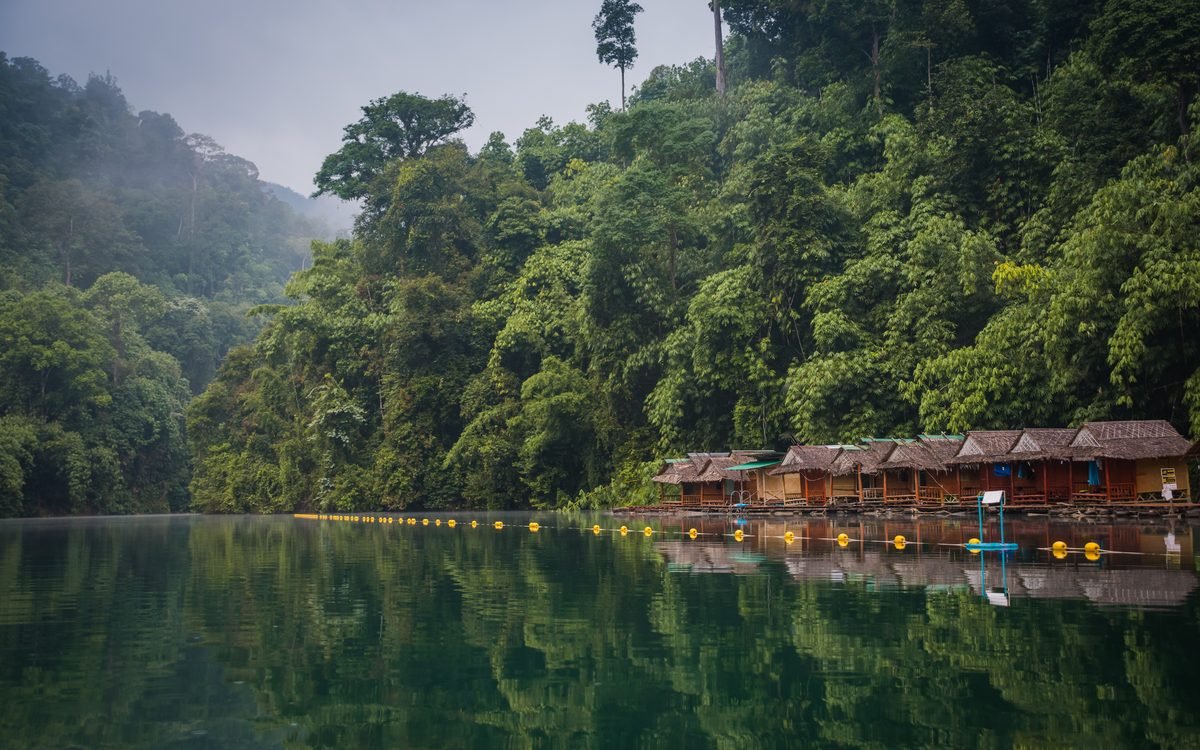
Thailand is tropical and warm year-round, but "the weather" varies a lot by region and month. Understanding the three seasons – and the fact that the two coasts run opposite monsoons – is the key to timing your trip. For the bottom-line answer, see our best time to visit guide.
🌴 Ready to plan?
Add it in the trip planner →Thailand runs on three broad seasons: cool-dry (Nov–Feb), the pleasant peak; hot (Mar–May), when Bangkok and the interior hit 35–40°C; and the rainy/green season (Jun–Oct), defined by short heavy downpours rather than constant rain. "Cool" is relative – it means comfortable 28–32°C days and cooler nights, not cold, except in the northern mountains where it genuinely chills after dark.
This is the crucial quirk. The Andaman coast (Phuket, Krabi, Phi Phi, Lanta) faces the southwest monsoon and is wettest May–October, driest November–April. The Gulf coast (Samui, Phangan, Tao) is on a different schedule, with its heaviest rain in October–November and good spells in January–April and August–September. So there's almost always a dry beach somewhere – you just have to pick the right coast for your dates. Our islands guide maps this out.
The north (Chiang Mai, Chiang Rai, Pai) is cooler and more seasonal, with genuinely chilly mornings from December to February – pack a layer. The catch is the burning season: from roughly late February through April, agricultural fires blanket the region in smoke haze, pushing air quality to unhealthy levels. If you're heading north specifically, aim for November–January and avoid March.
The capital and central plains are hot and humid most of the year, peaking April–May. The rainy season brings dramatic afternoon storms and occasional street flooding, but rarely all-day rain – you can still sightsee around the showers. Cool season (Nov–Feb) is the most comfortable time to pound the temple pavements without wilting.
Set your dates against the climate in the trip planner.
Three: cool-dry (November–February), hot (March–May) and rainy or "green" (June–October). The cool-dry season is the most comfortable and popular; the rainy season brings short, heavy afternoon showers rather than constant rain.
Because the two coasts face different monsoons. The Andaman coast is wettest May–October, while the Gulf coast's heaviest rain comes later, in October–November. That's why the right island depends on your travel dates.
Roughly late February to April, during the agricultural burning season, when air quality in Chiang Mai and Chiang Rai can turn unhealthy. If you want the north at its best, visit November to January and skip March.